
If you’ve been a boat owner in South Florida for a while, you know that barnacles under the hull are your worst nightmare. Substantial marine growth, even a thin layer of slime, can add drag, costing you speed, fuel, and wear on your engine.
But what is the way to clean a boat hull, so you know how to get rid of them?
Whether you’re considering doing a DIY clean or hiring a professional like Barnacle King, we’re here to help you learn the best practices and tips to get your boat looking like the first time it hit the water.
What Builds Up on a Boat Hull?
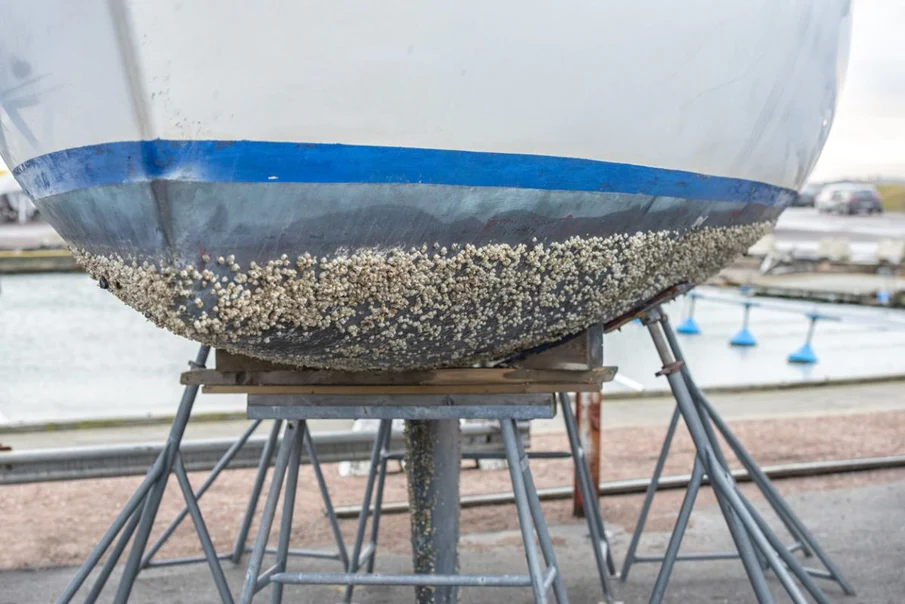
The short answer is biofouling, which is the accumulation of living organisms on submerged surfaces. It starts with a biofilm, a microscopic layer of bacteria and algae forming within hours of your hull hitting the water.
From there, soft growth like green algae and slime takes hold, followed by hard growth like barnacles, tubeworms, and mussels.
In South Florida, warm water temperatures and high salinity speed this cycle up. A boat sitting in a slip in Fort Lauderdale or Miami Beach will foul faster than one up north, which is why boat owners do year-round hull maintenance.
The damage goes beyond drag, too. Marine growth traps moisture against your gelcoat, which can lead to staining, blistering, and long-term surface damage. It also puts extra strain on your running gear, props, and shafts. Regular cleaning prevents all of that from gaining a foothold.
What Is the Best Thing to Clean a Boat Hull With?
This depends on whether you’re cleaning above or below the waterline, and whether the boat is in the water or out of it.
Out of Water Cleaning
A pressure washer set between 1,500 – 2,000 PSI with a wide 40-degree nozzle is a good starting point. That will handle loose slime, algae, and surface-level buildup without damaging your gelcoat.
From there, a marine-specific hull cleaner will break down the tougher deposits that water pressure alone won’t remove. Standard boat soap isn’t formulated for waterline stains or mineral buildup from barnacles, so it’s worth using a product designed for the job.
In Water Cleaning
This approach is gentler, only using soft-bristled brushes and plastic scrapers. The goal is to remove soft growth before it calcifies without stripping your antifouling paint.
If you’re keeping your boat in the water, a light in-water scrub every four to six weeks will prevent most serious buildup. Since we’re in Southeast Florida, this interval is shorter and you would likely need regular hull cleaning every two to three weeks.
Note: Never use metal scrapers on your hull. Metal gouges the gelcoat and tears through bottom paint, which actually accelerates biofouling by giving organisms a rough surface to grip.
How to Get a Fiberglass Hull Shiny Again
If your fiberglass hull has gone dull or yellowed, it’s usually a combination of these three factors:
- Oxidation
- Waterline staining
- Embedded grime
Restoring the finish is entirely possible, but it takes a few steps done in the right order.
Start with a thorough wash to remove all surface debris. Then apply a marine hull cleaner to the stained areas, working in small sections so the product doesn’t dry before you can scrub it in.
Use a medium-stiff brush for general staining and a stiffer detail brush for barnacle rings or stubborn mineral deposits. Rinse each section completely with fresh water before moving on.
Once the hull is clean and dry, a coat of marine wax will protect the finish from UV damage and block future grime. Waxing also makes the next cleaning easier, since growth has a harder time bonding to a smooth, waxed surface.
That said, there are limits to what DIY work can accomplish. If your gelcoat is deeply oxidized or blistered, a professional cleaning may be needed.
And if your boat stays in the water full-time, the underwater portions of the hull aren’t accessible for this kind of topside treatment, which is where professional underwater cleaning comes in.
Can I Use CLR on a Boat Hull?
CLR (or Calcium, Lime, Rust) remover can work on mineral deposits and waterline stains, but we generally don’t recommend them. It’s an acid-based cleaner, and acid doesn’t play well with every surface on your boat.
On fiberglass, CLR should be used sparingly and rinsed quickly. Letting it sit too long can etch or dull the gelcoat. On galvanized trailers, acid-based cleaners can cause serious damage, so keep CLR away from trailer components entirely.
If you do use it, cover or rinse any metal parts that might come into contact with runoff.
The safer option is a marine-specific hull cleaner formulated to dissolve organic and mineral buildup without the risks that come with general-purpose acid products. Marine cleaners are designed with your hull’s gelcoat and paint in mind.
So yes, CLR can get a job done in a pinch, but if you’re asking what is the best way to clean a boat hull, it’s not with general-purpose acid products.
Why Professional Hull Cleaning Is Worth It
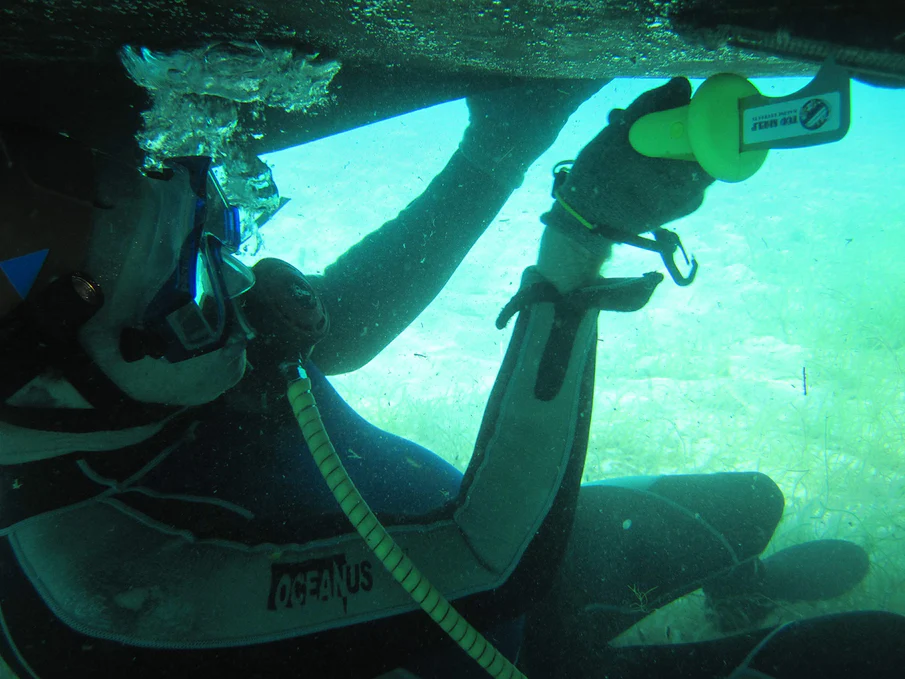
So, what is the best way to clean a boat hull? DIY cleaning works well for the parts of your hull you can reach. But if your boat spends most of its time on the water, you might not get to them unless you haul it out. That’s where professional dive cleaning fills the gap.
Regular attention, whether DIY or professional, keeps your fuel costs down, your performance up, and your gelcoat in good shape for the long run.
If your hull hasn’t been cleaned recently, or if you’re noticing reduced speed and higher fuel burn, it’s probably time to get someone in the water. Schedule a professional hull cleaning with Barnacle King and see the difference a clean bottom makes.
The team also inspects your zinc anodes, propellers, and other submerged components during every visit, catching early signs of wear or corrosion before they become bigger problems.
If you’ve ever wondered what is the best way to clean a boat hull with heavy growth already beyond standard scrubbing, Barnacle King also offers professional cavitation cleaning services.
We use eco-friendly ultrasonic technology to remove stubborn fouling without damaging your boat’s protective coatings.