If you’ve ever hauled your boat and found the bottom covered in a rough, crusty layer, you already know how stubborn barnacles can be.
The good news is that barnacle removal is a manageable job once you understand the process. The bad news is that doing it wrong can damage your hull or strip your bottom paint, leaving you hauling your boat for repairs.
This guide by the Barnacle King team walks you through the DIY approach, plus some genuinely helpful tips to keep your boat in top shape. Plus advice when it makes more sense to hand the job off to a professional.
Can Barnacles Damage a Boat Hull?
Yes. Apart from forcing engines to work harder and guzzle more fuel by 20-40%, barnacles are unsightly to look at and even harder to get rid of.
Barnacle shells bond to surfaces using a protein-based adhesive that hardens underwater. When they’re scraped off carelessly, their base plates can tear away gelcoat or pull chunks of bottom paint with them.
Over time, that exposed surface becomes a prime attachment point for the next round of growth, and it accelerates the cycle of fouling and repainting.
Barnacles also trap moisture against the hull. On fiberglass boats, that trapped moisture can lead to gelcoat blistering and staining that’s far more expensive to repair than the cleaning itself.
On metal components like trim tabs and engine mounts, barnacle coverage can mask corrosion and prevent your zinc anodes from protecting nearby metal.
How Do You Remove Barnacles From a Boat Hull?
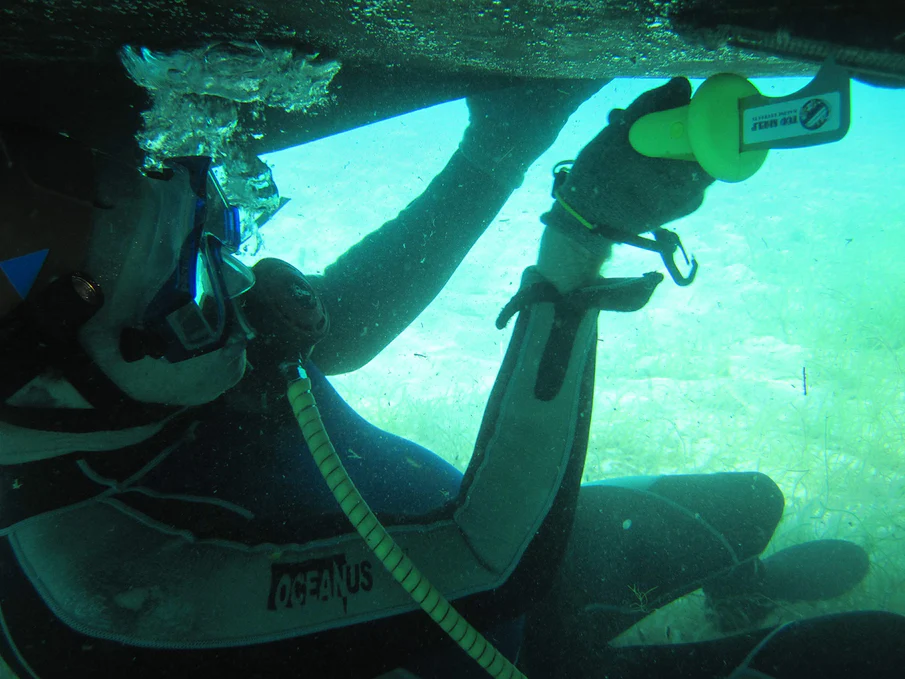
The process depends on whether your boat has bottom paint or bare gelcoat, and whether you’re working in or out of the water.
For boats with antifouling paint, the approach needs to be gentler to preserve that protective layer. For unpainted hulls, you have more room to work but also more surface to protect.
Here’s the general DIY sequence for a hauled boat:
- Scrape first. Use a plastic scraper or a stiff putty knife to knock down the tops of the barnacles and remove as much shell material as possible. Work at a shallow angle, around 30 to 45 degrees, to get under the edge of each barnacle without gouging the surface. Never use metal scrapers on fiberglass or painted surfaces.
- Pressure wash. A pressure washer in the 2,000-3,000 PSI range with a wide-angle nozzle (25 or 40 degree) will blast away loose growth and debris. Keep the nozzle 12 to 18 inches from the hull and use sweeping motions.
Don’t hold it in one spot, and don’t crank the pressure higher than necessary. On a painted hull, the pressure washer alone may handle most of the growth if the paint is in good condition.
- Apply a marine hull cleaner. After the bulk is gone, you’ll still have calcium base rings where each barnacle was attached. A marine-specific hull cleaner dissolves these deposits without the risks that come with general-purpose acids.
Apply in small sections, let it dwell for the recommended time, then scrub with a stiff-bristled brush and rinse.
- Inspect and clean up. Rinse the hull completely and run your hand over it. Any remaining rough patches need another pass with the cleaner and brush. The surface should feel smooth and consistent before you move on to waxing or relaunching.
For boats that stay in the water, the process is different. In-water cleaning relies on soft brushes and plastic scrapers to remove growth before it hardens, without stripping your antifouling paint.
This is where regular cleaning intervals make the biggest difference, because catching barnacles while they’re young and soft means they wipe off instead of requiring scraping.
Does Vinegar Remove Barnacles?
Vinegar is a mild acid (acetic acid), and it can dissolve the calcium carbonate that barnacle shells are made of.
Some boat owners have had success soaking small components like propellers in vinegar and wiping the barnacles off afterward. On a full hull, though, vinegar has real limitations.
It’s too weak to break down hardened, established barnacles in a reasonable timeframe. Getting it to stay in contact with a vertical or curved surface long enough to work is another challenge.
And on painted surfaces, even mild acids can affect bottom paint if left on too long. Vinegar might work for light, fresh growth on small metal parts. For anything more than that, a marine-specific cleaner formulated for hull surfaces is a safer and more effective option.
What Is the Best Barnacle Remover for Boats?
Barnacle exoskeletons are calcium carbonate, so any acid that dissolves calcium will technically work. The real question is which products do the job without damaging your hull or your trailer.
Marine-specific hull cleaners are formulated to dissolve barnacle deposits while being safe for gelcoat, fiberglass, and bottom paint. They’re the most reliable option for DIY work on the hull itself.
Products designed for marine use account for the materials they’ll come in contact with, which household cleaners don’t.
Muriatic acid (hydrochloric acid) is cheap and aggressive. It dissolves barnacles quickly, but it will also damage galvanized trailers, etch concrete, and burn skin on contact.
If you use it, you need full protective gear, plastic tarps over your trailer, and careful rinsing. It works, but the margin for error is thin.
CLR and similar calcium-dissolving household products fall somewhere in between. They can handle light deposits on metal parts, but they’re not formulated for marine surfaces and should be used sparingly on gelcoat.
The safest approach for most boat owners is a dedicated marine hull cleaner applied in sections with proper dwell time.
How to Remove Barnacles From a Boat Propeller
Propellers need extra care because they’re precision components. A gouged or pitted prop affects performance, creates vibration, and can damage your shaft over time.
If the boat is hauled, soak the prop in a bucket of marine cleaner or vinegar and let the solution do most of the work. Barnacles on metal surfaces tend to release more easily once their calcium base is softened.
After soaking, use a plastic scraper or stiff brush to clean the remaining material. Avoid metal tools on the prop surface itself.
For props on boats that stay in the water, regular cleaning is the only real prevention. Barnacle growth on bare metal running gear happens faster than on painted surfaces, and waiting too long means a diver has to scrape harder, which risks damaging the prop finish.
Some boat owners schedule separate prop cleanings between full hull services during hotter months when growth accelerates.
When is Professional Barnacle Removal the Smarter Choice?
DIY barnacle removal works when the boat is out of the water and the growth is manageable. But for boats kept in slips, the hull bottom isn’t accessible without hauling, and hauling costs time and money.
Professional dive cleaning handles what most boat owners can’t do themselves. A diver works the full underwater hull, running gear, and trim tabs without the boat ever leaving the water. That eliminates haul-out fees and downtime while keeping your hull on a consistent cleaning schedule.
Why South Florida Boaters Always Choose Barnacle King
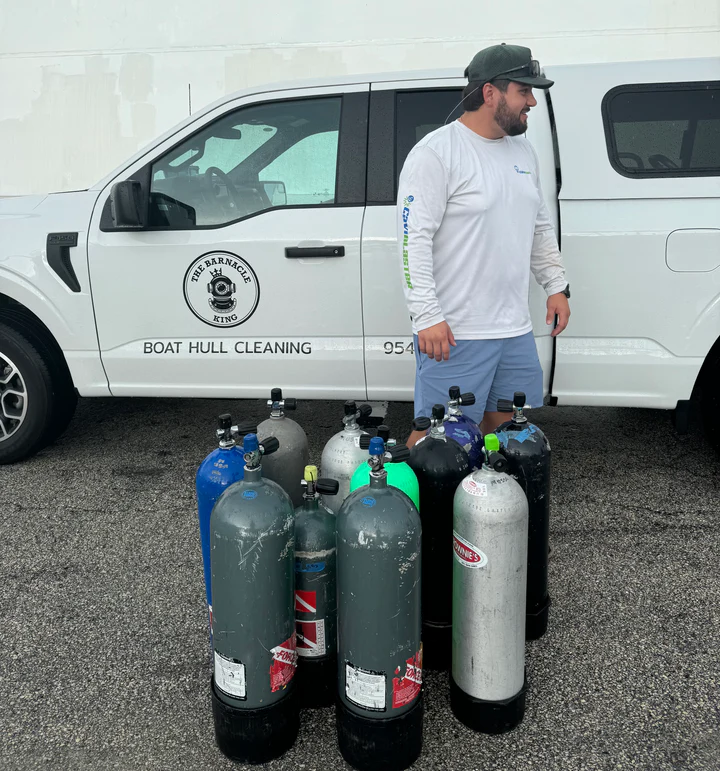
Barnacle King handles barnacle removal across Miami-Dade, Broward, and Palm Beach Counties, all done in the water with no dry docking required. Every hull cleaning includes before-and-after photos and a detailed dive report, plus real-time GPS tracking of the diver on-site.
The team also inspects your zinc anodes and running gear during every visit. For heavier fouling, cavitation cleaning uses ultrasonic technology to remove stubborn growth without damaging coatings.
If your hull is overdue for a cleaning, or you’re tired of fighting barnacles yourself, book a professional hull cleaning with Barnacle King and see what a clean bottom actually feels like on the water.
Our standard per-foot rates are published in full on the hull cleaning prices page, so you can see what a clean costs before you pick up the phone.