
South Florida’s waters are warm, salty, and full of nutrients. The perfect breeding ground for barnacles and algae, making it one of the fastest fouling environments in the country for boat hulls.
If you keep your boat in a slip anywhere from Miami-Dade to Palm Beach, it’s 100% at risk, whether you can see it or not. And this little “build-up” actually affects your boat’s speed and fuel usage, not to mention it also shortens the lifespan of your bottom paint.
So, knowing how often to clean your hull isn’t just a maintenance question. It’s a money question.
Getting the timing right means less drag, fewer repairs, and a boat that performs the way it should. Barnacle King will walk you through what’s dragging your boat, how to prevent it from happening, and how often you should do it.
Why Hull Cleaning Frequency Matters
Even a thin film of slime creates measurable drag on your hull. That drag forces your engine to work harder to maintain the same speed, which burns more fuel and puts unnecessary strain on your running gear.
Industry research has found that biofouling increases fuel consumption by 20-40%. The severity of the buildup determines where in that range you’ll land.
Beyond fuel costs, marine growth also shortens the life of your bottom paint. When barnacles attach and a diver has to scrape them off, paint comes with them. Boat owners who wait too long between cleanings often need a fresh bottom job sooner than expected.
That’s a significantly bigger expense than a routine cleaning. Regular, gentle cleanings preserve the paint and keep the surface smooth enough that soft growth wipes off without heavy scrubbing.
Growth also traps moisture against your hull, which can lead to gelcoat blistering on fiberglass boats. And if you’re not cleaning regularly, you’re probably not getting eyes on your zinc anodes, props, or shafts either, which means corrosion issues can develop unnoticed.
How Fast Does Marine Growth Build Up?
The speed of fouling depends on water temperature, salinity, and how often you run your boat. It also doesn’t help that you’re in South Florida’s warm waters – the biggest accelerator.
The higher the water temperature, the faster organisms colonize submerged surfaces. A biofilm of bacteria and microalgae can form within hours of your hull going in.
Within a couple of weeks, soft algae and slime take hold. Give it 4-6 weeks without cleaning and you’re looking at hard growth, barnacles and tubeworms that bond to the hull surface and don’t come off without scraping.
Saltwater also compounds the problem. Boats kept in freshwater environments foul much more slowly. Boat owners on the Okeechobee Waterway report only minor slime buildup over months, sometimes even years.
But boats docked in saltwater canals near the ICW in Fort Lauderdale or Miami Beach are dealing with an entirely different pace.
Several South Florida boat owners report needing monthly cleanings at minimum, with some in high-growth areas scheduling service every two weeks during summer.
Running your boat regularly helps slow things down. Moving water creates current across the hull, which discourages fouling and can reactivate antifouling paint. Boats that sit in a slip for weeks without moving foul faster than boats that get used often.
How Often Should You Clean Your Boat Hull?
If your boat is in South Florida, we recommend cleaning your hull every 4 to 6 weeks. That interval keeps growth in the soft stage, which means it can be wiped or lightly brushed off without damaging your bottom paint.
The exact frequency depends on your situation. Boats in warm, shallow slips with minimal water flow tend to foul faster than boats in deeper, more exposed areas.
Summer months are worse than winter. If your boat doesn’t get used often, fouling accelerates because there’s no movement to slow growth down.
Here’s a general framework based on what South Florida boat owners and dive service providers consistently report:
- Monthly cleaning is the most common schedule for boats kept in saltwater slips across Miami-Dade, Broward, and Palm Beach Counties.
- Twice-monthly cleaning works better during the summer months (June through October) when water temperatures peak and growth rates spike.
- Every 6-8 weeks may be enough during cooler winter months, though this depends heavily on your location and paint type.
- Freshwater or brackish water boats can often go two to three months between cleanings, since barnacles don’t colonize in fresh water. Soft slime still builds, but it’s far easier to remove.
Your bottom paint type also plays a role. Hard paints have specific guidelines about cleaning intervals. Some recommend waiting three months between scrubbings to avoid removing too much of the active biocide layer.
Ablative paints shed their surface gradually with use, which means frequent boating helps keep the hull clean on its own. If you’re unsure about your paint’s cleaning requirements, check the manufacturer’s guidelines or ask your diver.
What Happens If You Skip Cleanings?
Waiting too long between cleanings doesn’t just mean a dirtier hull. It changes the type of cleaning your boat needs. Soft growth like algae and slime can be removed gently with a cloth or soft brush.
That kind of cleaning is easy on your bottom paint and keeps the protective layer intact. You can check out our resources to find the best way to clean a boat hull (and why people just hire divers like us instead of bothering with cleaning it).
Once barnacles and hard growth take hold, a diver has to use scrapers, and scraping pulls paint off with the barnacles. That means your bottom job wears out faster and needs to be redone sooner. Fuel costs climb noticeably as growth accumulates too.
A hull carrying even moderate fouling creates enough drag to reduce speed and increase fuel burn on every outing. If you’re running your boat weekly, that adds up fast over a season.
There’s also the compounding effect. Boats that have been hauled and left on the hard for extended periods can take several heavy cleanings before the bottom paint starts performing well again. Some hard paints degrade on exposure to air.
That means the first few months back in the water may see heavier-than-normal fouling until the paint reactivates. Shorter intervals between cleanings are almost always cheaper than dealing with the consequences of waiting too long.
How Long Can a Boat Sit Without a Hull Cleaning?

It takes 4-6 weeks before significant growth takes hold. Beyond that window, you’re likely looking at hard growth that requires more aggressive removal and costs more to clean.
But the timeline is much more forgiving in freshwater. Boats stored on the Okeechobee Waterway or above the locks on the Saint Lucie River can go months with only minor slime buildup. However, freshwater doesn’t eliminate fouling entirely. It just slows it down and keeps it soft.
If your boat has been sitting longer than you’d planned, the smartest move is to get a professional cleaning sooner rather than later. The longer you wait, the harder the growth, the rougher the cleaning, and the faster your paint wears down.
Stay Ahead of Growth with Barnacle King
Hull cleaning in South Florida is one of those maintenance tasks that’s far cheaper and easier when done on time. A monthly cleaning keeps growth soft, protects your paint, preserves your fuel efficiency, and gives a diver regular eyes on your underwater hardware.
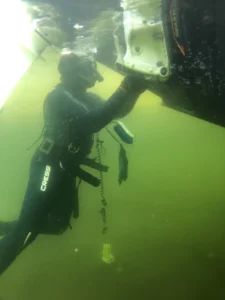
Barnacle King offers scheduled hull cleaning plans across Miami-Dade, Broward, and Palm Beach Counties, all done in the water with no dry docking required. Every service includes before-and-after photos, a detailed dive report, and a zinc anode inspection.
For hulls with heavier buildup, cavitation cleaning removes stubborn fouling without damaging your paint or coatings. If it’s been a while since your last cleaning, or if you want to set up a recurring schedule, get in touch with Barnacle King before growth gets ahead of you.